Candle Product Photography for Amazon Listings
Candle photography for Amazon is one of the trickier product categories to get right, and most sellers underestimate how much the images are costing them in lost conversions. Candles are inherently visual products, but they also have qualities that cameras struggle to capture honestly: translucent wax, subtle color gradients, delicate texture on the surface, and of course the flame itself. Getting all of those elements to read clearly in a single hero image takes real planning.
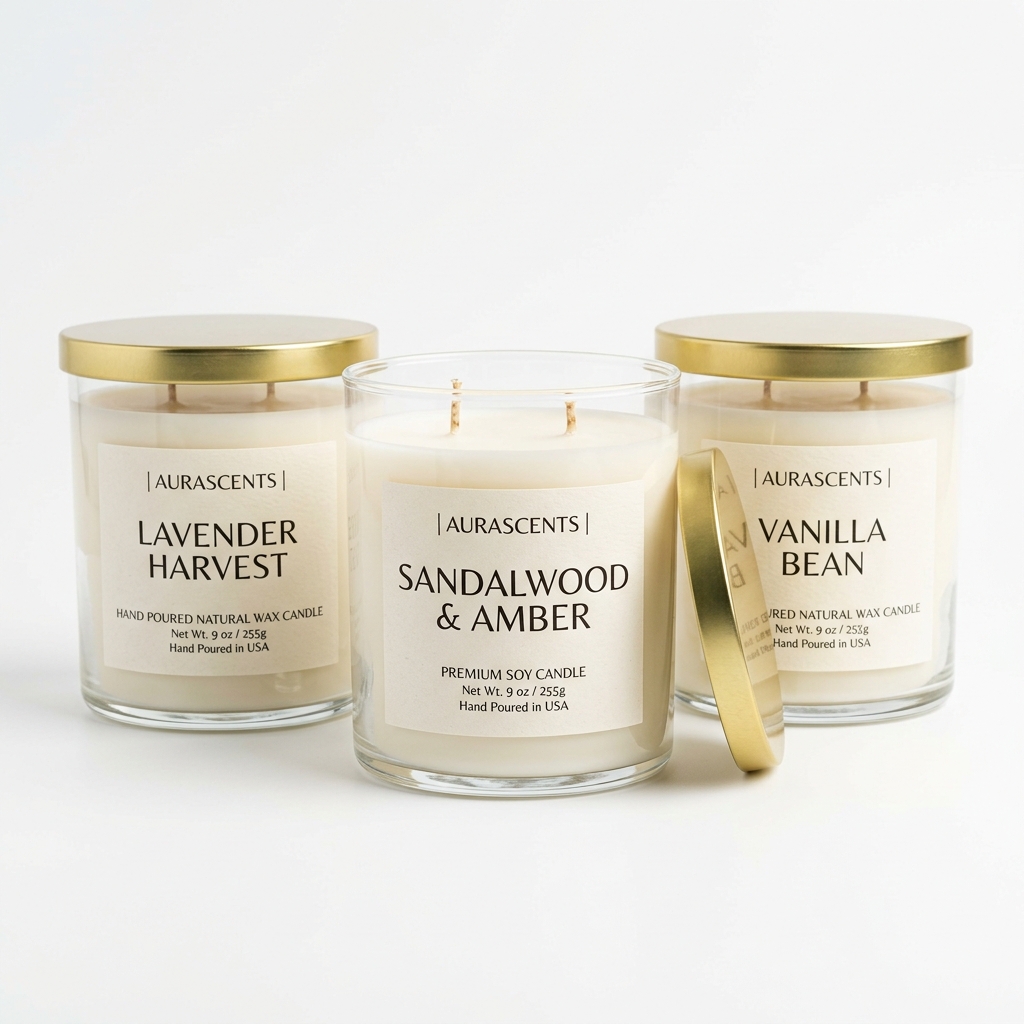
The pure white background requirement for Amazon hero images creates an immediate tension with candles. White wax on a white background disappears. Light-colored candles with minimal labeling look like nothing on screen. You need to control your lighting carefully so the candle has enough shadow and dimension to read as a three-dimensional object, without violating Amazon's white background rules. A very faint drop shadow is generally acceptable and does a lot of work here.
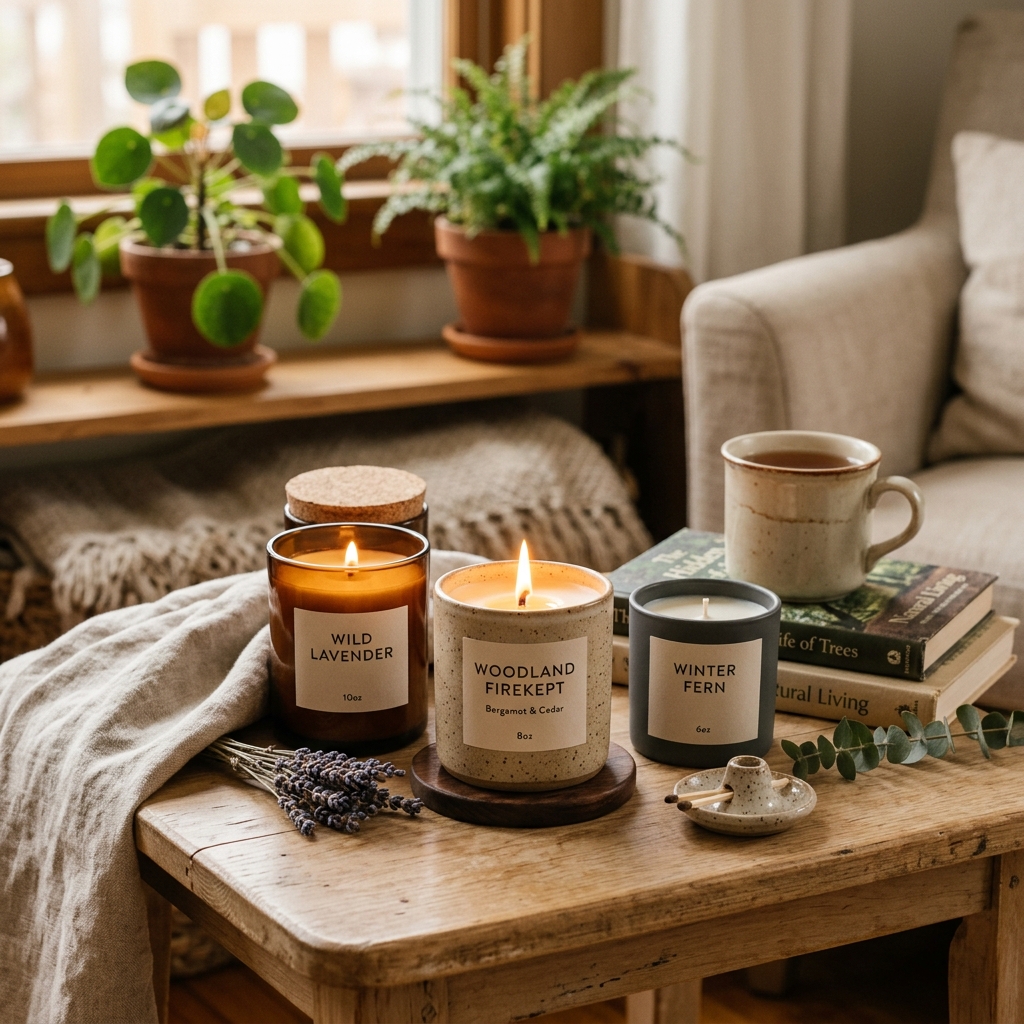
Lit versus unlit is a decision that affects every other choice you make. Amazon technically allows lifestyle and secondary images to show candles burning, and you should absolutely use that. A lit candle conveys warmth, ambiance, and product quality in a way that an unlit candle simply cannot. But flame photography has its own set of problems: long exposures blur the flame, short exposures freeze it in an unflattering shape, and mixed lighting between the flame and your studio strobes creates color casts that look terrible. You need to shoot lit candles in a controlled low-light environment with careful balancing of ambient and artificial light.
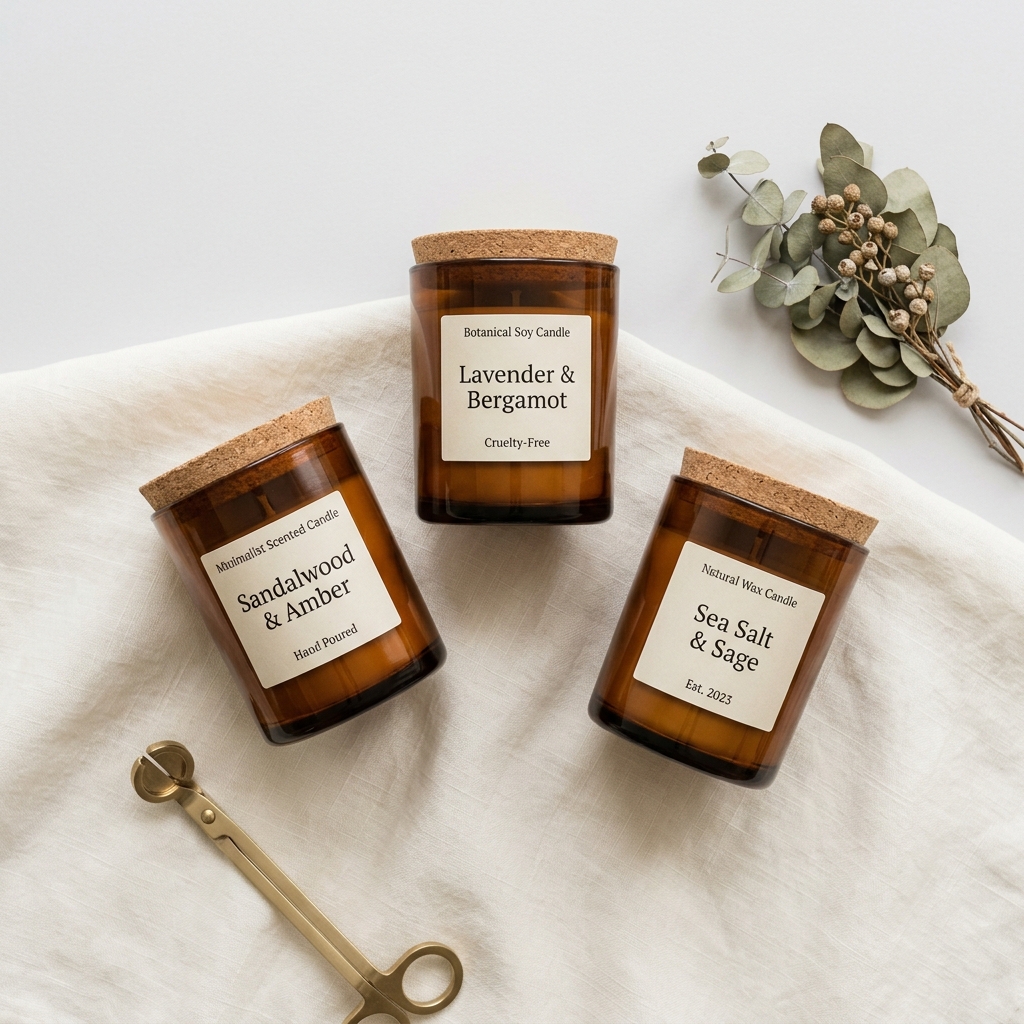
Container candles, pillar candles, and taper candles each have different photography requirements. Container candles need to show the vessel quality as well as the wax. Pillar candles need to show texture and any surface detail. Tapers need to show height and straightness. Think about what the customer is actually evaluating when they look at your product, and make sure your images answer those questions directly.
Scent is invisible, which means your secondary images need to do heavy lifting to communicate fragrance. Close-up shots of botanicals used in the scent, lifestyle context showing the candle in a bathroom or bedroom, and text overlays calling out the fragrance notes are all tools that top-performing candle listings use consistently. Do not rely on the title alone to convey what your candle smells like.
Example Images
Common Mistakes
Shooting white or light-colored candles with flat, even lighting
Flat lighting eliminates the shadows that give a candle its shape and three-dimensionality. On a white background, a pale candle shot this way looks washed out and unsubstantiated, like a low-quality product even if it isn't.
Use a single key light positioned at roughly 45 degrees to the side and slightly above the candle. This creates a gradual shadow that wraps around the candle and gives it visible form. Add a small reflector on the opposite side to bring up the shadow just enough so it doesn't go pure black. The result looks polished and shows the product clearly.
Photographing a lit candle with standard strobe or flash setups
Strobes overpower the flame entirely, making it look dim or invisible. The balance between the bright studio light and the warm candle glow is almost impossible to achieve with standard flash timing, and the result looks clinical rather than inviting.
Turn off your strobes and work with continuous LED lighting at a low intensity, combined with the ambient glow of the candle itself. Shoot in a dimmed room, set your aperture around f/8 for sharpness, and bracket your shutter speed to find the setting where the flame looks natural and glowing without blowing out. A shutter speed between 1/60 and 1/125 is usually the starting point.
Only submitting one or two images for a candle listing
Amazon allows up to nine images and customers buying candles have a lot of questions: What does the label look like up close? How tall is it? What does it look like when lit? What are the fragrance notes? A sparse gallery signals low effort and leaves conversion on the table.
Plan a full set of nine images before you start shooting. Include a clean hero shot, a top-down shot showing the wax surface and any texture, a close-up of the label, a lit candle shot, a lifestyle image in a relevant room setting, a size comparison or scale reference, and an infographic image that calls out burn time, fragrance notes, wax type, and wick information. Each image should answer a specific customer question.
Using candle images that make the color or opacity of the wax look different from the actual product
Candle wax color shifts dramatically under different lighting temperatures. If your studio lights are cooler than the light a customer uses at home, your ivory candle will photograph as white, and your amber candle will look yellow. Customers who receive a candle that doesn't match the listing image leave bad reviews and request returns.
Calibrate your white balance carefully and photograph the candle next to a gray card. Edit to a neutral color temperature first, then make minimal adjustments. If your wax has a specific named color, compare your edited image against a physical color reference before submitting. When in doubt, photograph in daylight-balanced continuous light and set your camera white balance to match.
Frequently Asked Questions
What happens if you shooting white or light-colored candles with flat, even lighting?
Flat lighting eliminates the shadows that give a candle its shape and three-dimensionality. On a white background, a pale candle shot this way looks washed out and unsubstantiated, like a low-quality product even if it isn't. Use a single key light positioned at roughly 45 degrees to the side and slightly above the candle. This creates a gradual shadow that wraps around the candle and gives it visible form. Add a small reflector on the opposite side to bring up the shadow just enough so it doesn't go pure black. The result looks polished and shows the product clearly.
What happens if you photographing a lit candle with standard strobe or flash setups?
Strobes overpower the flame entirely, making it look dim or invisible. The balance between the bright studio light and the warm candle glow is almost impossible to achieve with standard flash timing, and the result looks clinical rather than inviting. Turn off your strobes and work with continuous LED lighting at a low intensity, combined with the ambient glow of the candle itself. Shoot in a dimmed room, set your aperture around f/8 for sharpness, and bracket your shutter speed to find the setting where the flame looks natural and glowing without blowing out. A shutter speed between 1/60 and 1/125 is usually the starting point.
What happens if you only submitting one or two images for a candle listing?
Amazon allows up to nine images and customers buying candles have a lot of questions: What does the label look like up close? How tall is it? What does it look like when lit? What are the fragrance notes? A sparse gallery signals low effort and leaves conversion on the table. Plan a full set of nine images before you start shooting. Include a clean hero shot, a top-down shot showing the wax surface and any texture, a close-up of the label, a lit candle shot, a lifestyle image in a relevant room setting, a size comparison or scale reference, and an infographic image that calls out burn time, fragrance notes, wax type, and wick information. Each image should answer a specific customer question.
What happens if you using candle images that make the color or opacity of the wax look different from the actual product?
Candle wax color shifts dramatically under different lighting temperatures. If your studio lights are cooler than the light a customer uses at home, your ivory candle will photograph as white, and your amber candle will look yellow. Customers who receive a candle that doesn't match the listing image leave bad reviews and request returns. Calibrate your white balance carefully and photograph the candle next to a gray card. Edit to a neutral color temperature first, then make minimal adjustments. If your wax has a specific named color, compare your edited image against a physical color reference before submitting. When in doubt, photograph in daylight-balanced continuous light and set your camera white balance to match.
Candles on other platforms
Skip the trial and error
Get Amazon-ready Candles photos without the guesswork
Upload one product photo. ProductScene generates a complete Amazon gallery — every image slot, correctly sized, styled for the platform.
Try free