Etsy Kitchen Gadget Photography Tips That Actually Convert
Etsy buyers shopping for kitchen gadgets are looking for two things simultaneously: proof that your product actually works, and confidence that it'll look good in their kitchen. That's a harder needle to thread than it sounds. Unlike Amazon, where buyers often accept stark white backgrounds and clinical shots, Etsy's audience is shopping with both their head and their aesthetic sensibility. They're comparing your garlic press or mandoline slicer not just against other kitchen tools, but against the overall vibe of their home. Your photos need to do the functional heavy lifting — show scale, demonstrate use, reveal material quality — while also fitting into the warm, aspirational world Etsy buyers are living in.
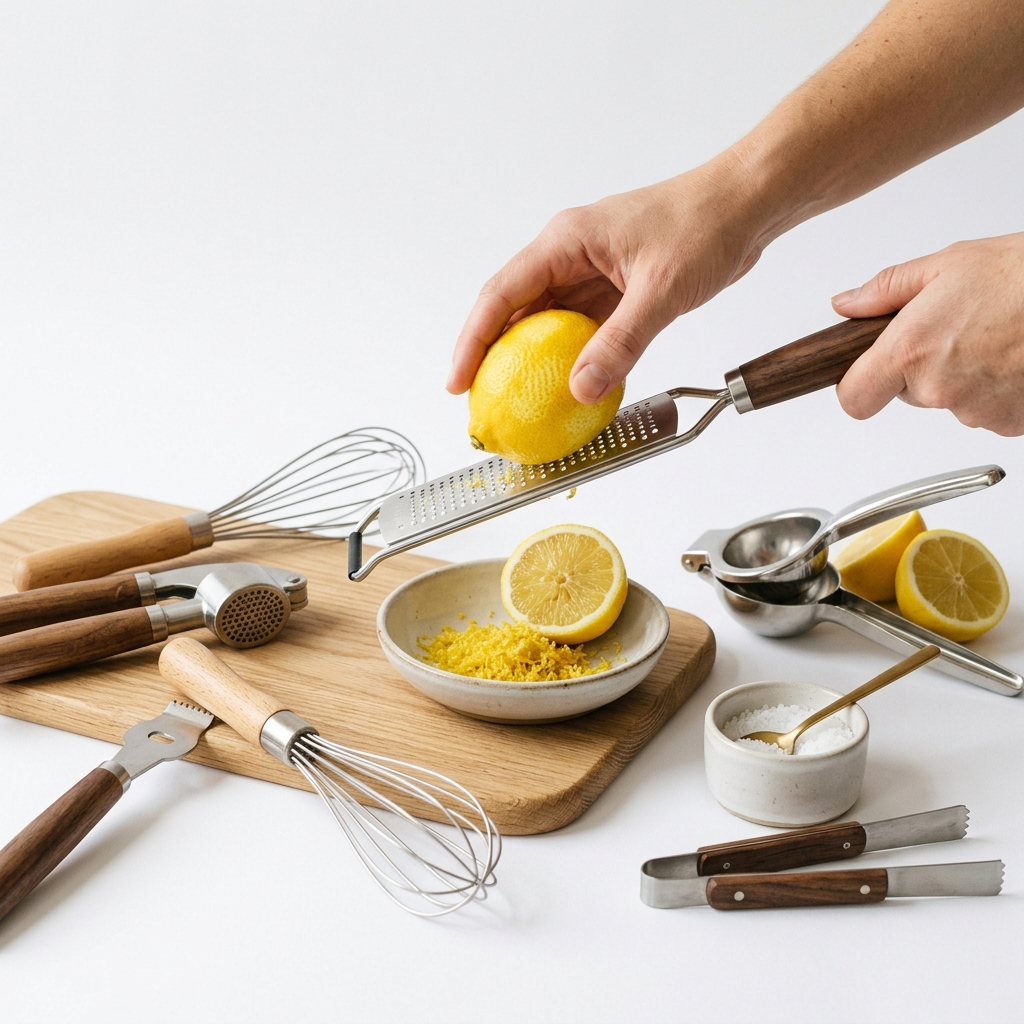
Kitchen gadgets come with a specific set of photographic headaches. Stainless steel and chrome reflect everything — your ceiling, your hand, your phone screen. Transparent acrylic components blow out under harsh light. Small gadgets with intricate parts (think zesters, herb strippers, cherry pitters) are genuinely difficult to shoot in a way that communicates what they actually do. And lifestyle staging for kitchen tools requires real props, real food, and real effort — a wooden cutting board and a sprig of rosemary won't save a bad shot of your avocado slicer.
The good news is that Etsy rewards effort here in a way that other platforms don't. A genuinely well-photographed kitchen gadget listing on Etsy will outperform a technically mediocre one by a significant margin, even if the product is identical. Buyers are spending time browsing, they're saving items to wishlists, they're making decisions based on feel. Get your photos right and your conversion rate will show it. This page breaks down exactly how to do that — from handling reflective surfaces to staging food props without them looking like a bad cooking blog from 2009.
Example Images

Common Mistakes
Shooting reflective metal gadgets under overhead room lighting
Standard ceiling lights create hot spots and uneven reflections across stainless steel, chrome, and polished surfaces. The result looks cheap and makes the product hard to read visually, even if the actual item is high quality. Buyers can't distinguish the shape or finish because the reflections are competing with the product itself.
Use a light tent or diffusion panels on both sides of the product. Failing that, shoot near a large north-facing window with a white foam board reflector on the opposite side. The goal is wrapping the product in soft, even light so the metal reads as a smooth gradient rather than a patchwork of hot spots. For very shiny surfaces, polarizing filters on your lens (or even on your phone with an adapter) can cut glare dramatically.
No scale reference in any of the listing images
Kitchen gadgets vary enormously in size and buyers cannot judge dimensions from photos alone, even with measurements in the listing description. A compact citrus juicer and a countertop-scale one can look identical in a cropped product shot. When buyers can't confidently gauge size, they hesitate or abandon the listing entirely.
Include at least one photo showing the product held in a hand, or placed next to a recognizable object like a standard dinner plate or coffee mug. A hand-held shot is especially effective for Etsy because it adds a human, handmade-feel element that resonates with the platform's audience. Don't rely on your description to do this work — show it visually.
Staging kitchen gadgets with generic, uncurated props
A cutting board and a lemon next to your lemon zester, shot against a white subway tile background — this setup exists in approximately 40,000 other Etsy listings. It communicates nothing distinctive about your product and your brand blends into the noise. Worse, poorly chosen props (wilted herbs, bruised fruit, mismatched surfaces) actively undermine buyer confidence in the product quality.
Choose props that tell a specific story. Think about who your actual buyer is and what their kitchen looks like. If you're selling to someone with a modern minimalist kitchen, use matte black surfaces, concrete textures, and clean lines. If your buyer is more farmhouse-style, linen textiles, raw wood, and ceramic bowls work better. Use fresh, beautiful produce — and I mean grocery-store-beautiful at minimum, farmers-market-beautiful ideally. The props should feel like they belong together, not like you grabbed whatever was on the counter.
Skipping action or in-use shots entirely
Kitchen gadgets are tools. Buyers need to see them doing the thing they're supposed to do. A static shot of a spiralizer tells you almost nothing useful. An in-use shot showing zucchini being spiralized into a bowl — with the ribbons of vegetable mid-air — immediately communicates function, ease, and result. Without this, buyers have to imagine how the product works, and imagination creates doubt.
Shoot at least one in-use sequence. You don't need a second person — most kitchen gadgets can be operated with one hand while the other holds the camera or sets a self-timer. If the product requires two hands, recruit someone or use a tripod with a remote shutter. Show the input (the ingredient), the action (the product doing its job), and ideally the output (the finished result in a bowl or on a board). Three photos that tell that story will do more for your conversion rate than six glamour shots of the product sitting still.
Frequently Asked Questions
What happens if you shooting reflective metal gadgets under overhead room lighting?
Standard ceiling lights create hot spots and uneven reflections across stainless steel, chrome, and polished surfaces. The result looks cheap and makes the product hard to read visually, even if the actual item is high quality. Buyers can't distinguish the shape or finish because the reflections are competing with the product itself. Use a light tent or diffusion panels on both sides of the product. Failing that, shoot near a large north-facing window with a white foam board reflector on the opposite side. The goal is wrapping the product in soft, even light so the metal reads as a smooth gradient rather than a patchwork of hot spots. For very shiny surfaces, polarizing filters on your lens (or even on your phone with an adapter) can cut glare dramatically.
What happens if you no scale reference in any of the listing images?
Kitchen gadgets vary enormously in size and buyers cannot judge dimensions from photos alone, even with measurements in the listing description. A compact citrus juicer and a countertop-scale one can look identical in a cropped product shot. When buyers can't confidently gauge size, they hesitate or abandon the listing entirely. Include at least one photo showing the product held in a hand, or placed next to a recognizable object like a standard dinner plate or coffee mug. A hand-held shot is especially effective for Etsy because it adds a human, handmade-feel element that resonates with the platform's audience. Don't rely on your description to do this work — show it visually.
What happens if you staging kitchen gadgets with generic, uncurated props?
A cutting board and a lemon next to your lemon zester, shot against a white subway tile background — this setup exists in approximately 40,000 other Etsy listings. It communicates nothing distinctive about your product and your brand blends into the noise. Worse, poorly chosen props (wilted herbs, bruised fruit, mismatched surfaces) actively undermine buyer confidence in the product quality. Choose props that tell a specific story. Think about who your actual buyer is and what their kitchen looks like. If you're selling to someone with a modern minimalist kitchen, use matte black surfaces, concrete textures, and clean lines. If your buyer is more farmhouse-style, linen textiles, raw wood, and ceramic bowls work better. Use fresh, beautiful produce — and I mean grocery-store-beautiful at minimum, farmers-market-beautiful ideally. The props should feel like they belong together, not like you grabbed whatever was on the counter.
What happens if you skipping action or in-use shots entirely?
Kitchen gadgets are tools. Buyers need to see them doing the thing they're supposed to do. A static shot of a spiralizer tells you almost nothing useful. An in-use shot showing zucchini being spiralized into a bowl — with the ribbons of vegetable mid-air — immediately communicates function, ease, and result. Without this, buyers have to imagine how the product works, and imagination creates doubt. Shoot at least one in-use sequence. You don't need a second person — most kitchen gadgets can be operated with one hand while the other holds the camera or sets a self-timer. If the product requires two hands, recruit someone or use a tripod with a remote shutter. Show the input (the ingredient), the action (the product doing its job), and ideally the output (the finished result in a bowl or on a board). Three photos that tell that story will do more for your conversion rate than six glamour shots of the product sitting still.
Kitchen Gadgets on other platforms
Skip the trial and error
Get Etsy-ready Kitchen Gadgets photos without the guesswork
Upload one product photo. ProductScene generates a complete Etsy gallery — every image slot, correctly sized, styled for the platform.
Try free